Home / Setting Posts in Shallow Limestone
Setting Posts in Shallow Limestone
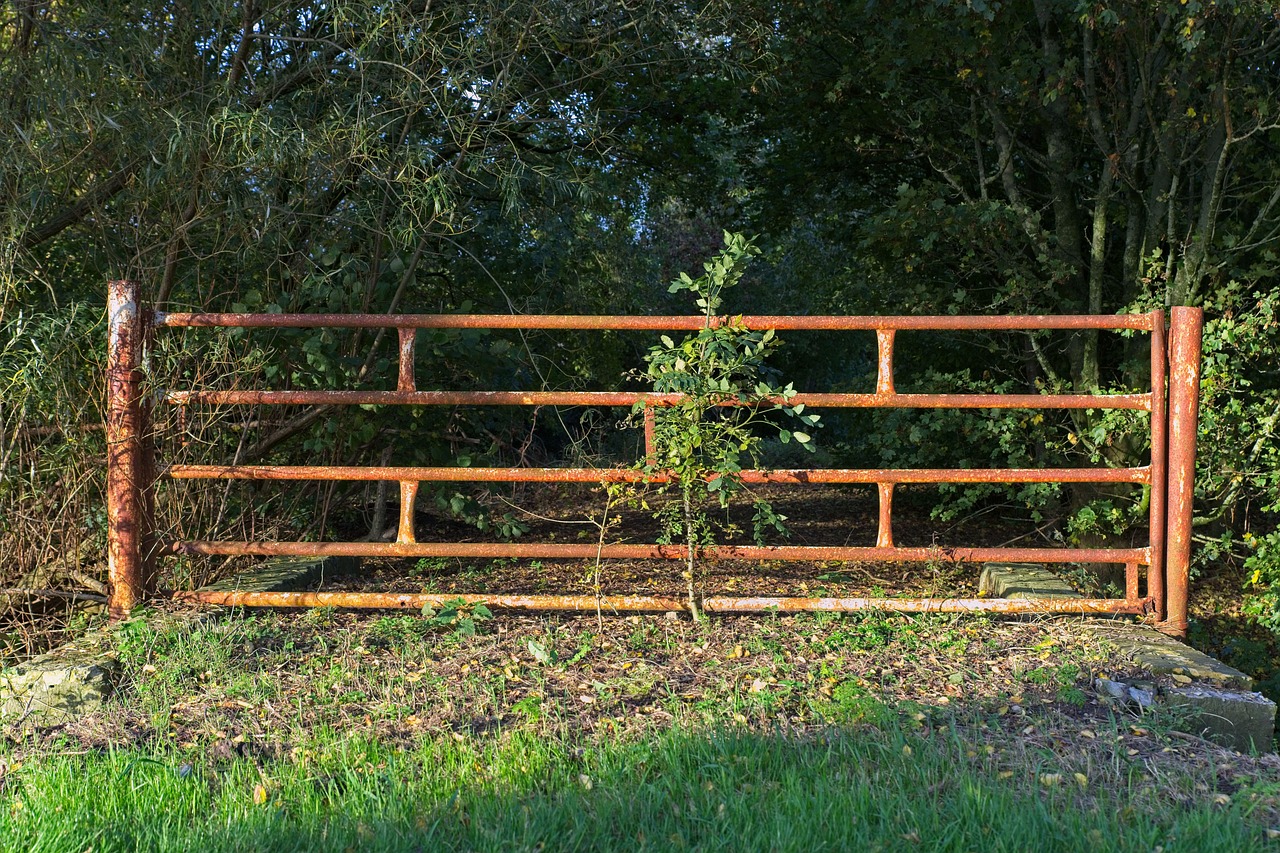
Setting a gate post where limestone lies close to the surface calls for anchoring the post into the rock itself, not burying it in a thin layer of soil. The usual method is to drill into the stone, set the post or an anchor rod with grout or epoxy, and brace it until the bond cures. It takes more work than digging a hole, but it gives a post that does not move.
Limestone around Georgetown
The western side of Georgetown sits on the edge of the Edwards limestone country, where the layer of soil over rock can be only a few inches deep in places. The stone itself varies. Some is dense and hard, some is layered with soft marl, and some is full of cracks and small voids where water has dissolved the rock. A single yard can show all of these types within a few steps.
That variety means a gate post cannot be planned from a drawing. The only way to know is to probe each post location with a digging bar or a test drill. A bar that rings and bounces off the rock means solid stone, while a bar that sinks in with a dull thud means soft material or a void.
Digging as deep as the rock allows
If there is a foot or more of soil over rock, a conventional footing set down to the rock surface can work, as long as the base sits on solid stone and not on loose rubble. Clear all loose soil and broken pieces from the bottom of the hole until bare rock shows. Concrete poured on clean rock bonds to it better than concrete poured on dirt.
If rock is within a few inches of the surface, digging deeper is not an option. In that case, the footing must be drilled into the stone, or the post must be mounted on a plate bolted to the rock. A wider footing spreads the load across more stone and helps in places where depth is limited.
Drilling into rock
A rotary hammer drill with a masonry bit, or a core drill for larger holes, cuts into limestone. The hole should be larger than the post or rod, and deep enough to hold it firmly. A depth of about eight to twelve inches into solid rock is common for a gate post, and more for a heavy leaf. Keep the bit cool and clear the dust often, since a clogged hole drills slowly and can overheat the bit.
Wear eye and ear protection and a dust mask. Limestone dust is fine and irritating to the lungs, and a wet drilling method that uses water to carry the dust away keeps the air clean.
Grout and epoxy
Once the hole is drilled and cleaned of dust, the post or anchor rod is set and the space around it filled. Non shrink cement grout is common for posts set in larger holes, as it expands slightly and fills every gap. Epoxy resin bonds a threaded rod to the rock and cures hard, suiting small diameter anchors. Both need a clean, dry hole to bond properly, so blow out dust and wipe the sides before filling.
Hold the post plumb while the grout sets. Braces made of lumber, clamped to stakes or to a nearby fence, keep the post from drifting. Check the plumb on two faces just before the grout stiffens, and do not touch the post until it has fully cured.
Base plates and anchor bolts
When drilling a large hole is impractical, a steel base plate bolted to the rock gives a solid mounting. Anchor bolts are drilled and epoxied into the stone, and the plate sits on a bed of grout that levels it and fills any gap. A post is welded to the plate or bolted through it. This method suits a post at the edge of a patio, a step or a walk, where there is little room to dig.
The plate must be sized for the load. A larger plate with more bolts resists tipping better, and four bolts are better than two. Leave the post unpainted at the base until the work is done, then seal the joint between the plate and the stone with a flexible sealant so water cannot work under it.
Dealing with fractured or soft rock
Not all limestone holds a bolt. Fractured rock can crack further under load, and soft layers can crumble around an anchor. When the drill suddenly drops, jumps or throws out mud, the bit has hit a soft layer or a void. Move the post a few inches and try again, or go deeper until the drill meets firm stone.
If the rock is poor at every spot, a wider concrete pad poured over the rock, with steel reinforcement tied into the rock where it can, may be the best answer. Consult someone who has worked on limestone sites, since a footing that fails once is expensive to redo.
Drainage and finishing
Rock does not drain like soil, and water can collect around a post set in a pocket of stone. Slope the ground or the top of the grout away from the post, and leave a path for water to leave. Where the soil above the rock is shallow, water often flows along the rock surface, so keep it from running into the hole.
Check the post after the first heavy rain and the first hot spell. A post anchored in solid rock should not move at all, and any movement points to a poor bond that should be fixed before the gate is hung.
Testing the finished post
Once the grout has cured for the full time on the label, test the post before the gate goes on. Push firmly at the top in each direction and watch the base for any movement. Tap the grout collar with a hammer and listen for a hollow sound that would show a gap. A post set in solid rock should feel like part of the ground. If it moves even slightly, drill and regrout now, because a loose post under a swinging leaf only gets worse with each season and each use of the gate.